Proper selection of playground materials is vital to ensure the safety, inclusivity, suitability and enjoyability of your playground – as well as delivering value on your investment for years to come.
At Playdale, we know that no two playgrounds are the same and our extensive range of material options are on hand to accommodate a wide range of needs.
Read on to learn more about your options for equipment materials and surfacing.

When it comes to the framework of your playground equipment, there are three major options that are commonly used. Each have their own associated sets of pros and cons and may be used in tandem across different pieces of equipment in a single playground.
Our metal playground equipment is constructed with hard-wearing stainless steel, which offers three distinct advantages over competing materials in playground builds:
• Longevity and sustainability
• Resistance to damage and vandalism
• Design flexibility.
Using high-quality 304-grade stainless steel, the most adaptable and widely used steel in the world, our metal playgrounds can last for decades, are capable of supporting significant weight and can easily withstand constant use, making metal the material of choice for many playground builders.
They also hold up well against rain, wind and changing weather conditions, while requiring less maintenance than wood alternatives.
Metal’s ability to be formed also means total design flexibility across a wide number of shapes – ideal for climbing frames, monkey bars, swings and more.
However, metal is not perfect – it can be susceptible to temperature sensitivity, becoming very hot or very cold. It’s also harder than plastic or wood, meaning any falls or hard impacts could be more painful for the user.
And, in the long-term, rust and corrosion may be a consideration.
While this is a worthwhile consideration, schools and councils should ensure to account for the cost of maintenance of metal playground equipment compared to other alternatives.
Sustainable laminate playground equipment is one of the most common alternatives to metal and has a number of distinct advantages. At Playdale, we use high-pressure laminate (HPL), also known as CGL (compact-grade laminate), which:
• Provides a smooth, splinter-free surface
• Is durable and impact-resistant
• Offers excellent weather resistance and full design flexibility.
While metal playground equipment can be susceptible to chipping paint, laminate playgrounds usually have the colour moulded into the material itself, ensuring a long-lasting paint job.
Wooden playground material equipment, like our Woodland Eco Towers, is classic and timeless, giving children the chance to interact directly with nature. Timber construction provides a softer-impact alternative to metal and is renowned for its natural aesthetic, fitting in perfectly to forest parks, farms and schools.
When reputable and FSC®-certified suppliers are used, wooden playground equipment is the most sustainable choice. Playdale Playgrounds has achieved Forest Stewardship Council® (FSC®) Chain of Custody Certification (FSC® C227343) and we can therefore serve as an ethical supplier for councils or schools aiming to meet their sustainability criteria.

Playground surfacing is another vital (and often-overlooked) consideration, which should be afforded as much thought as the material of the equipment itself.
Playground surfacing must be accessible for children of all mobility needs, while providing a soft landing for falls and remaining resistant to high levels of footfall, without requiring repair or replacement.
BS EN 1177 is the British and European standard for assessing playground surface materials, notably in their ability to reduce injuries incurred through falls.
The key consideration is Critical Fall Height (CFH) – or the maximum height from which a child can fall onto a surface, while still receiving adequate impact protection.
The surfacing you choose must meet or exceed the Critical Fall Height of the equipment that sits atop it. For example, a 2m height climbing frame must be mounted on playground surfacing that is tested to a CFH of at least 2m.
We offer a number of options to that effect. Our team of playground design experts will help you choose the perfect material for your specific needs and playground design.
Wetpour rubber holds a number of benefits for playground surfacing: it offers excellent impact absorption and is capable of meeting high CFH ratings under BS EN 1177.
It’s also wheelchair and pushchair-accessible, and available in a range of colours.
Wetpour has a higher initial cost than some alternatives and can fade over time, but it still offers a long-lasting, high-performance solution for your playground flooring. Find out more about our Wetpour options.
Bonded rubber mulch offers a lower-cost alternative to wetpour, delivering a more natural-looking appearance with strong impact attenuation.
Bonded rubber mulch also blends well with natural play environments, pairing well with wooden playground equipment.
However, it may wear or loosen with time and is less capable of handling heavier wheeled traffic, offering a shorter total lifespan compared to wetpour.
Artificial grass gives the look of natural grass but remains usable all-year-round. It is also low-maintenance compared to the real thing. This flooring type can be combined with shock pads for fall protection and offers good drainage.
Artificial grass offers a number of practical benefits but is more expensive than the real thing. It’s also susceptible to flattening in high-traffic areas after heavy use.
Loosefill – such as bark, woodchip or sand – offers the lowest installation cost of any surfacing material and provides good impact protection when maintained at the correct depth.
However, loosefill must be frequently topped up, as it can be displaced by play and weather, meaning maintenance is a must. While pushchairs and wheelchairs can be used with some forms of loosefill, it’s generally not ideal for mobility and would not be considered particularly wheelchair-friendly.
Matta Tiles are a series of rubber safety tiles that can be retrofitted to existing sites, delivering quick installs with good impact protection.
Matta Tiles’ modular construction means that damaged areas can be replaced in isolation, saving your business from having to replace the entire flooring install in the event of damage.
Aesthetically, Matta Tiles do show visible joins between tiles, which can shift if not installed correctly. Weeds may grow through these joints that can also detract from your playground’s look and feel over time.
At Playdale, we know that every playground project has its own set of needs – and that’s why we offer such a huge range of materials for equipment and surfacing.
Your project’s needs will depend on factors like your budget, your location and the type of playground. And, depending on the type of play equipment you wish to specify and whether your playground is intended for junior play or early years, you may find that a combination of different materials provides the best results for your needs.
However, you should also consider:
The location of your playground will play a part. Playgrounds by the coast, for example, which are exposed to salty air, are more likely to benefit from using plastic or timber playground equipment. Our timber is laminated to minimise rotting and splits.
Meanwhile, wood playground equipment is ideal for woodland applications, fitting seamlessly into the natural environment.
In many applications, schools are likely to use timber playground equipment, such as our adventure trials range, as timber’s tactility is better for development. Metal is less likely in school applications due to budget constraints.

Public playgrounds in the UK typically see a much wider range of different materials, depending on the area in which the playground is installed. Public playgrounds generally use more steel than schools, thanks to steel’s strength and resistance to vandalism.

This depends on your choice of playground material and surfacing! Even low-maintenance playground materials will require some attention, even if this is simply someone inspecting the equipment and flooring for safety.
Chat to one of our experts today to find out more about the specific maintenance required for each of our products.
To ensure your playground material choices are as safe as possible, we always recommend taking your users into consideration first – don’t simply specify equipment based on the cheapest or most durable option.
By focusing on compliance with safety standards like BS EN 1177, appropriate material selection, impact protection, accessibility and the ability to conduct required maintenance, you can help ensure your playground’s safety and security in both the short- and long-term.
In terms of flooring, wetpour rubber generally provides most accessible option for children with varying mobility needs. It delivers a smooth, seamless playground surface option that’s easily accessible for wheelchairs, pushchairs and walking aids.
Other alternatives include artificial grass, which can be very accessible if installed correctly, and Matta Tiles – although joints between these tiles can create minor bumps.
Find out more about accessible playground specification.


We understand that every penny matters. Schools across the UK are under increasing pressure to make their budgets stretch further while delivering the best possible experience for pupils. With changes to PE and school sport funding on the horizon, planning and managing your budgets carefully is more important than ever. The UK Government has recently […]
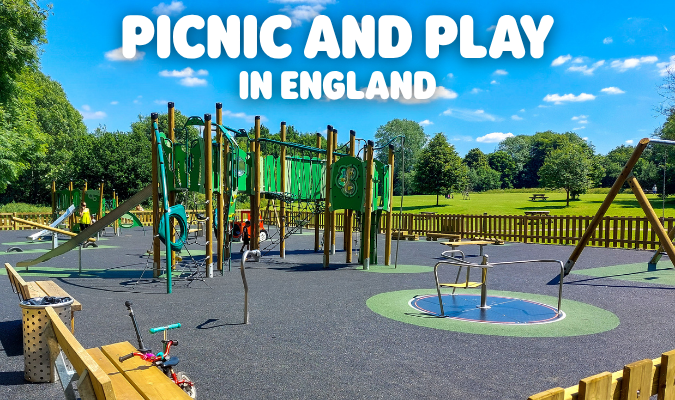
Picnic & Play… in England Welcome to our 2026 Picnic and Play guide, bringing together some of our favourite family-friendly parks and playgrounds across England. With fantastic playground equipment and plenty of space to unpack a picnic, each destination makes the perfect place for a family day out this summer. There are, of course, many […]
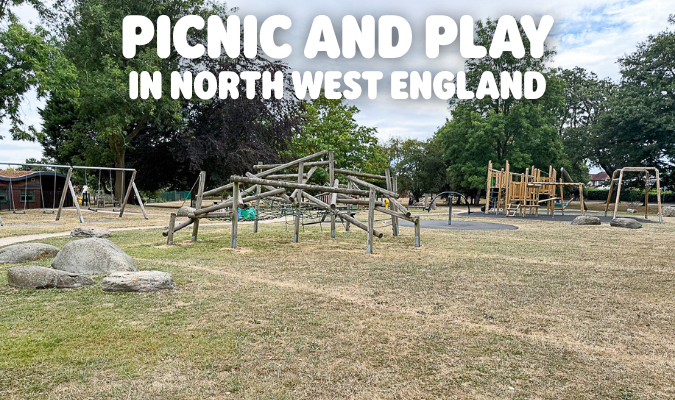
Picnic & Play… in North West England Welcome to Playdale’s Picnic and Play guide for 2026, created to help families find the best parks and playgrounds over the summer holidays! We’ve made sure all these parks are equipped with a fantastic selection of playground equipment and spaces to relax and enjoy a picnic. This time, […]