Inclusive and SEN Playground Equipment
What is inclusive play?
Inclusive play refers to play opportunities that are designed to be accessible, engaging and beneficial to children of all abilities, ages and backgrounds.
This could include physical accessibility, such as ramps and flat playground surfacing for wheelchair users, transfer points, wide pathways and more.
This also extends to sensory accessibility, cognitive accessibility and the social dimension of play: helping children with different needs play alongside one another, rather than in separate designated zones.
All children, including neurotypical and nondisabled children, benefit from inclusive design – allowing them to learn about what makes each other different, socialise in harmony and cooperate during play. This includes children with sensory differences, those on the autism spectrum, children with ADHD, those with visual or hearing impairments and children with learning or cognitive differences.
Inclusive design, done properly, improves the experience of the play space for everyone – even adults accompanying children with disabilities.
For further context on how inclusive design fits within broader playground planning, see our guide to playground equipment, design and safety.
The legal framework for inclusive play
The primary piece of legislation governing inclusive provision in UK outdoor spaces is the Equality Act 2010. The Act places a duty on service providers – including schools, local authorities, leisure operators and any organisation that opens a play space to the public – to make reasonable adjustments to ensure that disabled people are not placed at a substantial disadvantage, compared to non-disabled users.
For playgrounds, this means operators cannot simply rely on standard equipment. Operators must actively consider whether their provision creates barriers for disabled children and their families, taking steps to remove those barriers where it is reasonable to do so.
Outdoor spaces must also comply with BS 8300, the British standard for the design of an accessible and inclusive built environment. BS 8300 provides technical guidance on surface specifications, gradient requirements, accessible route widths and the provision of accessible rest areas. While it does not prescribe specific playground equipment, its principles apply to the circulation routes, entry points and surfacing of any outdoor play environment.
For the full breakdown on legislative and standards context, see our guide to UK playground safety standards.
Designing an accessible playground
Designing an accessible playground means making deliberate decisions and integrating accessibility at every stage – not just selecting one or two accessible pieces of equipment and placing them beside a standard layout.
Accessibility must be considered in the surface, the layout, the spacing, the equipment and the routes that connect them. The three areas below cover the most critical design decisions:
Surfaces and pathways
The surface of a playground has a direct bearing on who can use it. For wheelchair users, children with mobility aids and parents using buggies, the key requirements are firmness, stability and slip-resistance.
Loose-fill materials such as bark chips and sand are difficult to traverse with wheels. Smooth, firm surfaces such as wet-pour rubber or Matta Tiles provide flat, unobstructed surfaces that do not impede wheelchair movement, while also meeting the impact attenuation requirements of BS EN 1177.
Accessible pathways should be a minimum of 1,800mm wide to allow two wheelchair users to pass, with no abrupt changes in level and gradients no steeper than 1:20 where possible.
Transfer points – where a child moves from a wheelchair onto play equipment – should be clearly identifiable, at an appropriate height and supported by an immediately adjacent stable surface. Surface specification for an inclusive playground should be consistent across the whole space, not just within designated accessible zones.
Equipment spacing and layout
Layout is one of the most consequential decisions in inclusive playground design. Equipment that is spaced too closely creates congestion that is difficult for wheelchair users to navigate.
Circulation routes between pieces of equipment should be wide enough to accommodate a powered wheelchair or mobility scooter. They should also lead logically through the space, with no dead ends or awkward turns.
Fall zones around equipment must be maintained in line with BS EN 1176. However, in an inclusive playground, these zones should also be considered in the context of accessible routes. A fall zone that cuts across the only accessible path to a piece of equipment defeats the purpose of its inclusion.
Equipment should be grouped to create natural play circuits that any child can follow, regardless of their mobility, with quiet or lower-stimulation areas positioned away from the busiest, noisiest equipment. For detailed guidance on layout principles, see our guide to planning and designing a playground.
Wheelchair-friendly design
Wheelchair-friendly playground design ensures that a child who uses a wheelchair can reach, engage with and enjoy the same playground as their peers.
Key features of a wheelchair-friendly playground include:
• Wide entry points and pathways (minimum 900mm clear width at any point, 1,800mm where two users need to pass)
• Transfer platforms at an appropriate height – typically 400–500mm – with a support handle
• Ground-level play elements, such as sand and water basins, and play panels accessible from a seated position
• Inclusive roundabouts, designed so that a child can board and exit while remaining in their wheelchair.
Wheelchair-friendly playgrounds should also consider accessible rest areas, ensuring that no children are excluded from sitting with their peers. Extended tables and inclusive tables should be used to create space for all children to rest, eat and play tabletop games together.
Importantly, wheelchair-friendly features should not segregate disabled children into a separate area of the playground. The goal is integration: shared equipment that any child can access, positioned within the main play area rather than on its periphery.
Inclusive playground equipment you should include in your design
Selecting the right equipment is central to inclusive playground design. The most effective inclusive play spaces combine a range of equipment types that address different physical, sensory and social needs, rather than relying on a single accessible item to satisfy the brief.
Key inclusive equipment types include:
Inclusive swings
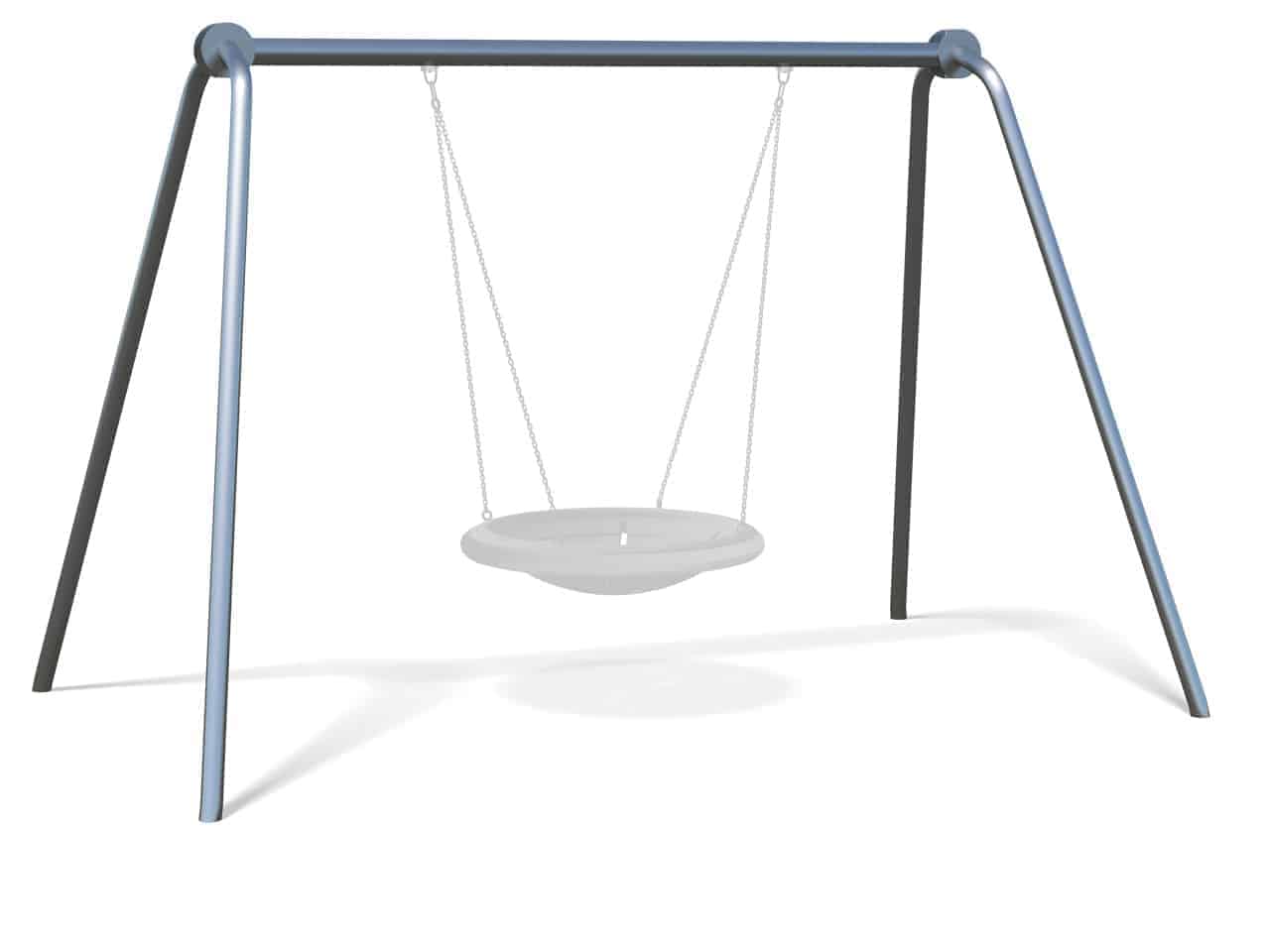
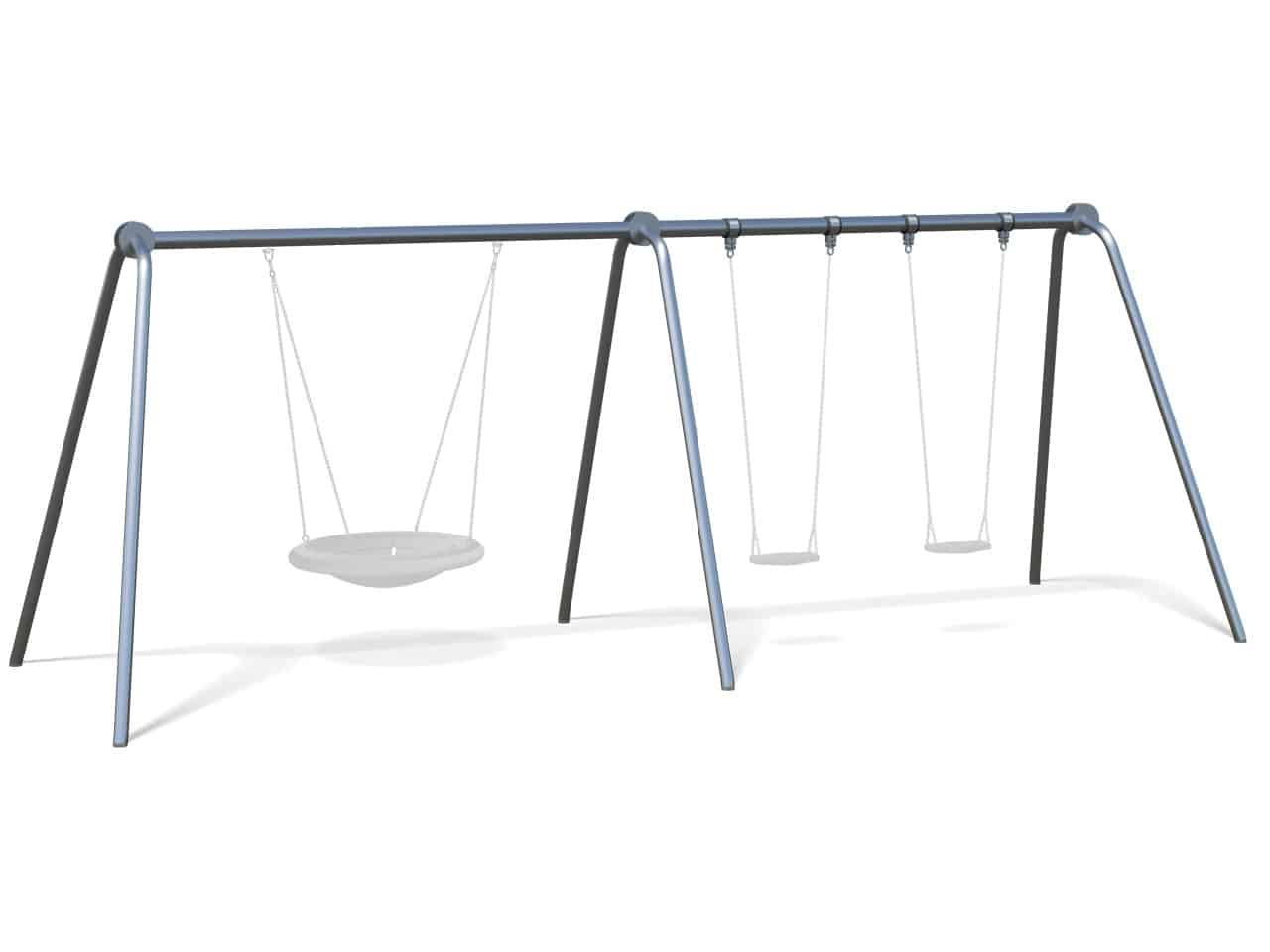
Cradle seats support younger children and children with limited trunk control. Inclusive team seats allow a parent or carer to sit alongside a child, while basket swings accommodate children who cannot sit upright in a standard swing seat.
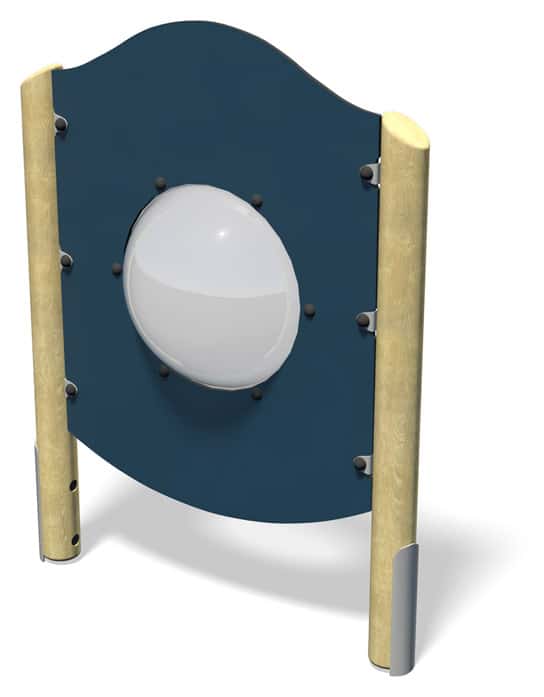
Sensory play panels
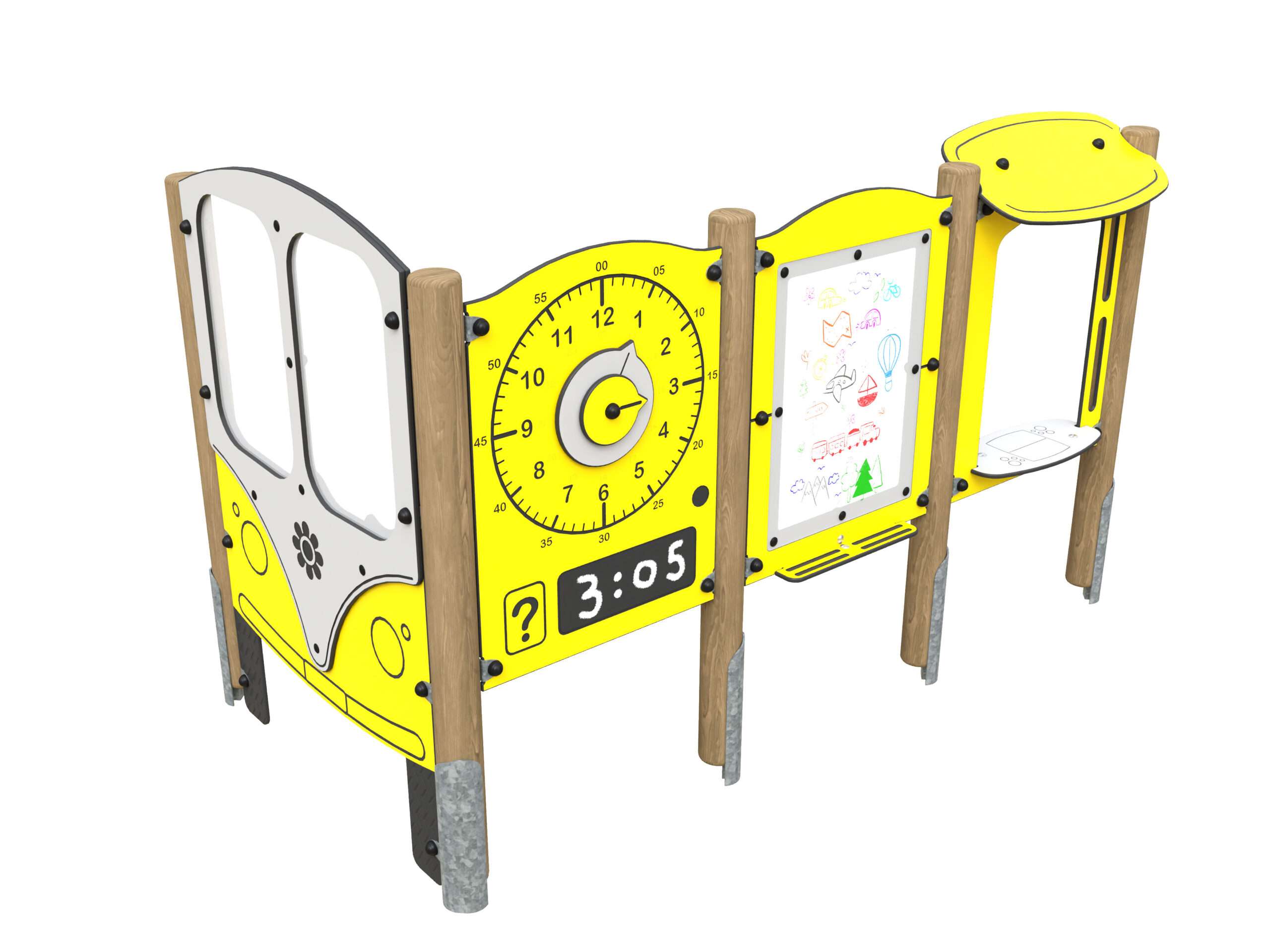
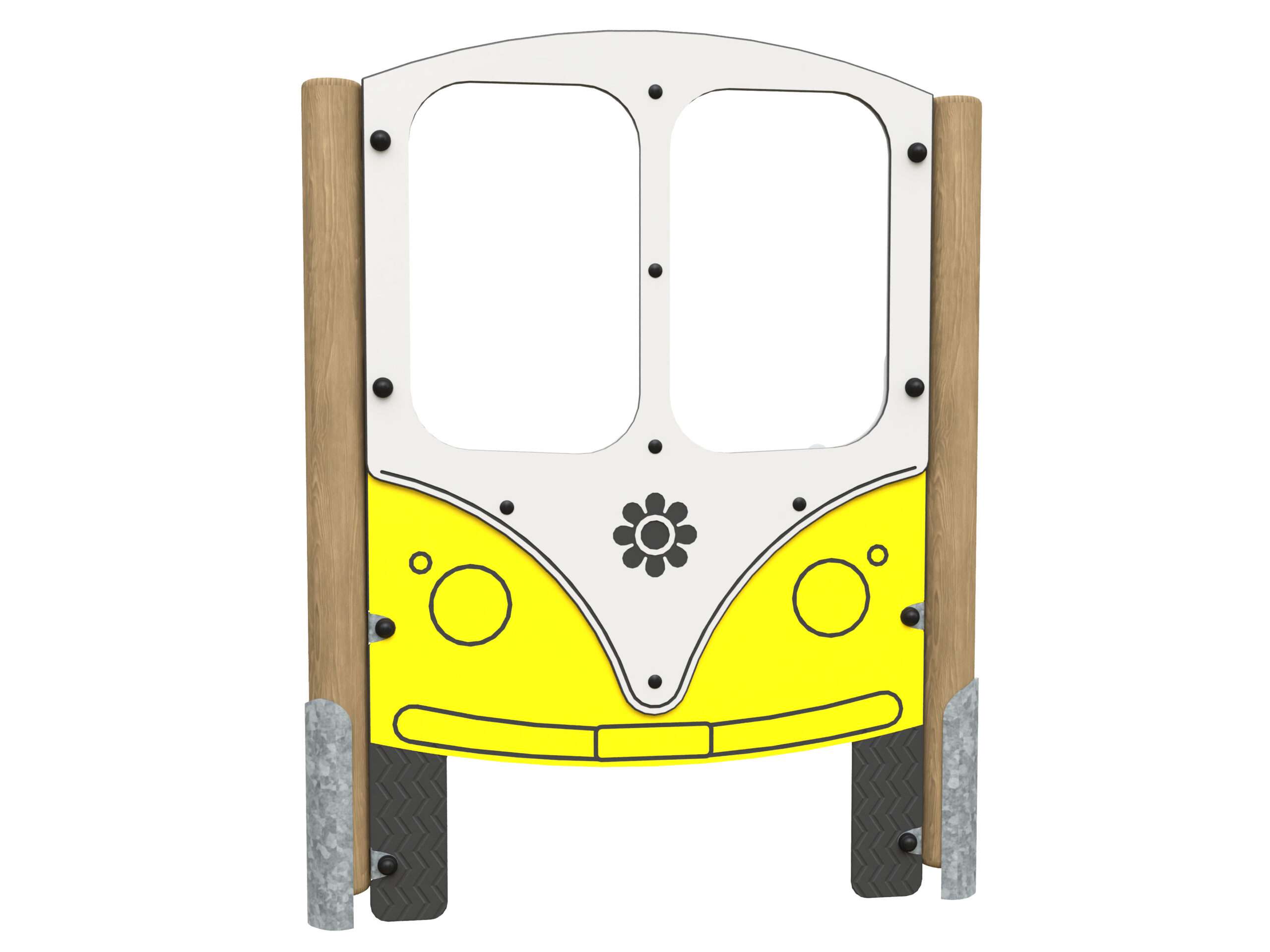
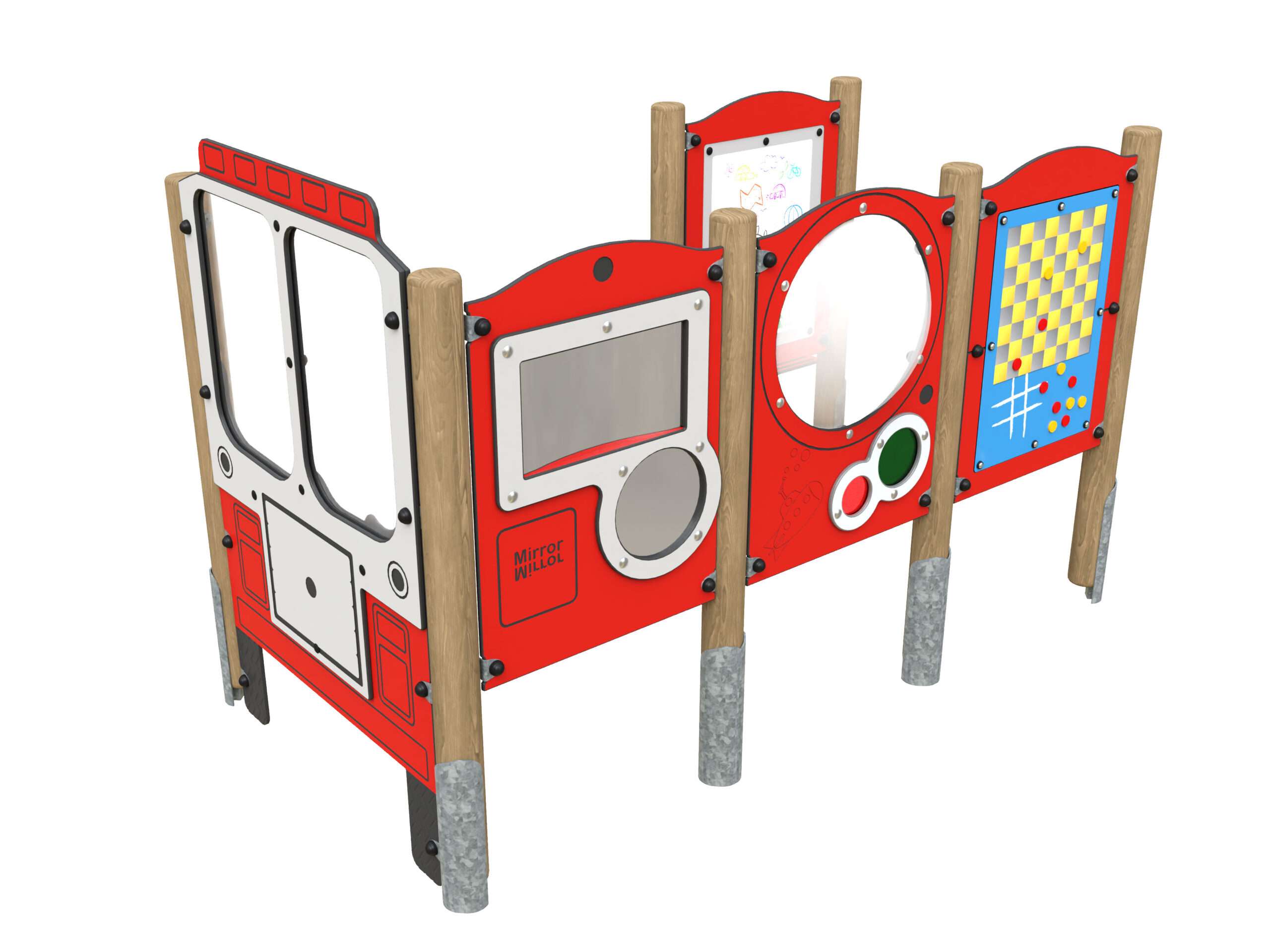
Ground-level panels with tactile, visual and auditory features that can be engaged with from a wheelchair or standing position – particularly valuable for children with visual impairments, sensory processing differences or autism spectrum conditions.
Musical playground equipment
Outdoor musical equipment provides a number of key benefits, such as sensory stimulation and social interaction. Accessible to children with a wide range of physical and cognitive abilities.
Accessible multi-play units
Equipment with ramped access to elevated platforms, wide decks and graduated challenge levels. Transfer points with support handles allow children to move from a wheelchair onto the equipment and explore at their own pace.
Gravity bowls
Bowl-shaped spinning equipment, usable by children with a range of physical abilities, including those with limited mobility.
Inclusive roundabouts
Roundabouts designed so that a wheelchair user can board and ride without leaving their chair, spinning alongside other children on the same piece of equipment.
Explore the full range of inclusive playground equipment.
Designing for neurodiversity
Neurodiversity refers to the natural variation in how human brains process information. Neurodivergent children – including those with autism, ADHD or ADD, sensory processing disorder (SPD), dyspraxia and other conditions – often have distinct needs in outdoor play environments that go beyond physical accessibility.
Understanding these needs is increasingly recognised as an essential part of inclusive playground design – particularly within schools, nurseries and early years settings.
Children on the autism spectrum may find busy, unpredictable environments overwhelming. Playgrounds that provide clearly defined zones, predictable routes through the space and designated quiet areas can help reduce sensory overload.
Equipment with repetitive, rhythmic movements – such as swings and gentle spinners – are often beneficial, as proprioceptive input (deep pressure and joint stimulation) is frequently regulating for autistic children. Equipment that produces sudden or unpredictable sounds, or creates very high levels of visual stimulation, may be difficult for some autistic children to manage.
Children with ADHD typically benefit from environments that provide varied challenges, opportunities for physical exertion and equipment that allows for different levels of engagement.
Equipment with multiple play values – such as climbing structures that can be used at different intensity levels – supports this.
For children with sensory conditions, a range of sensory experiences at different intensities allows children to self-select the stimulation level that is right for them. Sensory panels, musical playground equipment, textured surfaces and equipment with different movement types – such as movers or seesaws – all contribute to this.
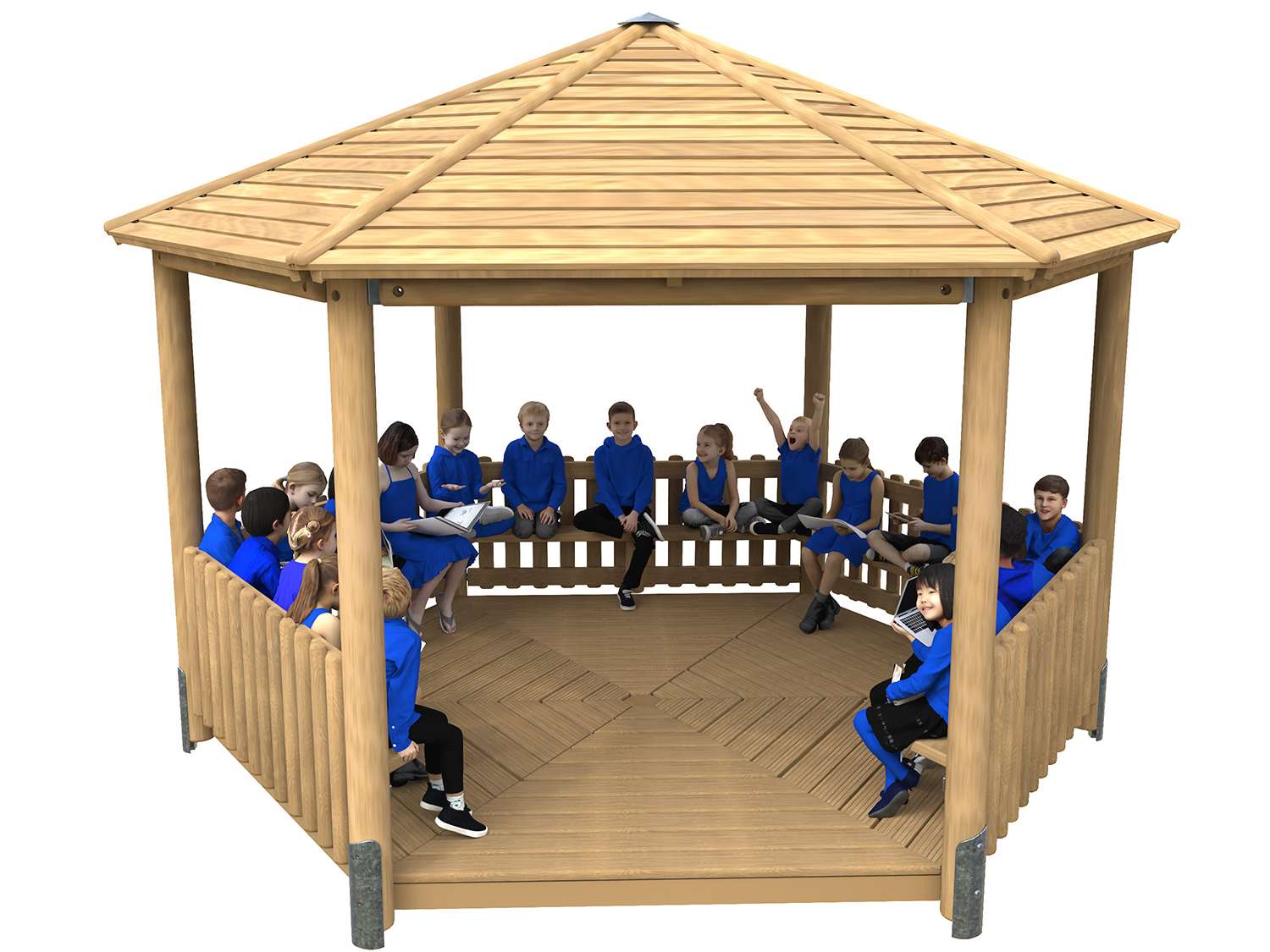
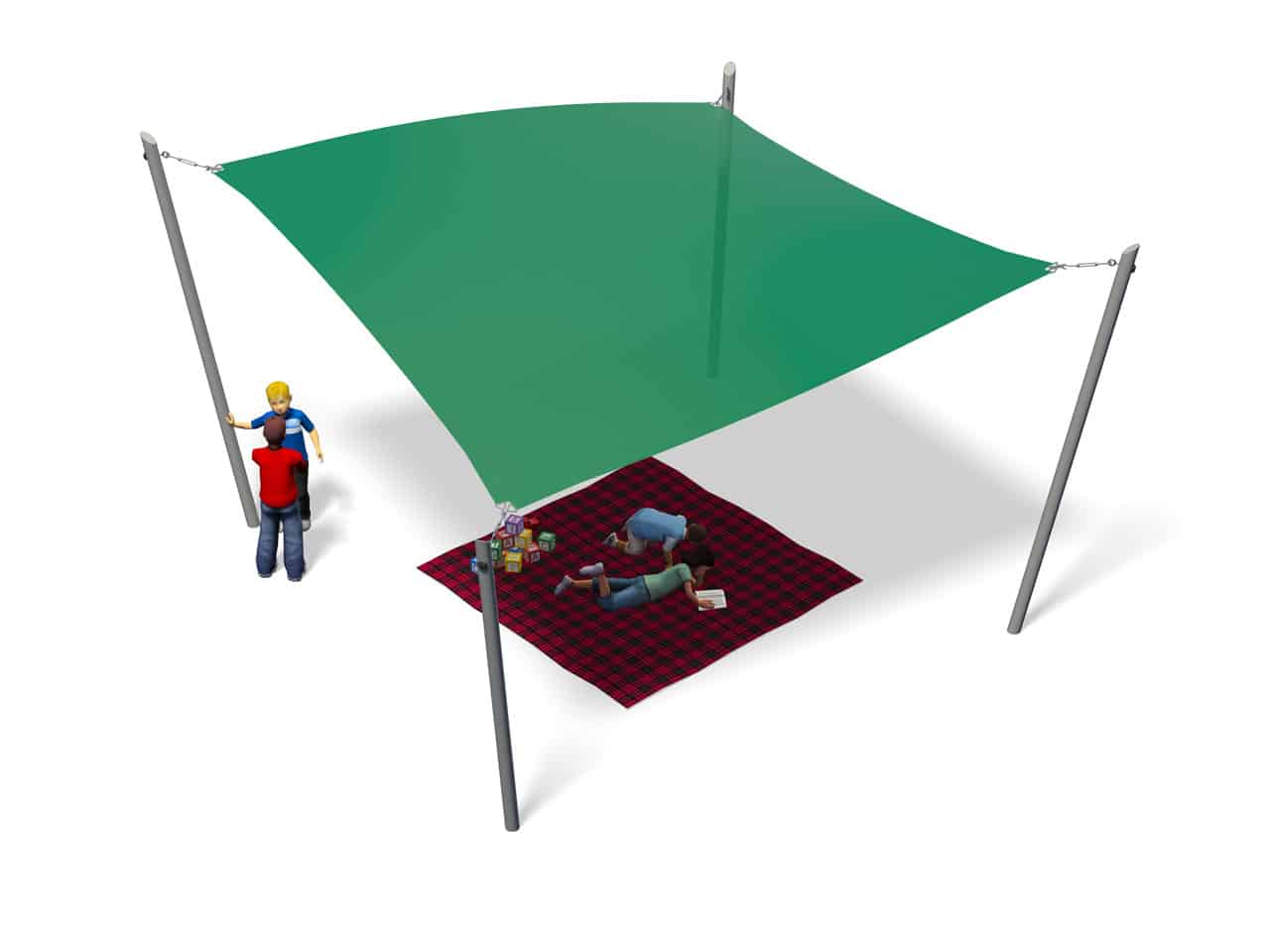
Quiet areas – shaded, lower-stimulation spaces away from the busiest equipment – are also an important feature for neurodivergent children who need a retreat. A simple shelter with seating, positioned with natural screening from the main play area, can make a significant difference to whether a neurodivergent child feels comfortable remaining in the playground.
For more on how rest and quiet areas fit within playground design, see our guide to planning and designing a playground.
How to ensure a holistic inclusive playground design
A truly inclusive playground is more than a collection of accessible items – it is a coherent environment designed with the full spectrum of users in mind from the outset.
Alongside the physical accessibility considerations covered in the section above, the following principles address the holistic design qualities that make a playground genuinely inclusive for neurodivergent children, children with sensory needs and users of all ages.
1. Prioritise sensory variety
Distribute sensory-rich equipment throughout the space, rather than concentrating it in one zone. Sensory panels, musical instruments, textured surfaces and water features provide engagement at different intensities, allowing children to self-select the stimulation level that suits them.
This benefits all children, including those with autism spectrum conditions and sensory processing differences.
2. Include a quiet, low-stimulation area
A shaded shelter or seating area away from the busiest equipment – with natural screening, if possible – gives neurodivergent children, and children who need to self-regulate, a space to retreat that sits within the safety of the playground.
This is particularly important for children with autism or anxiety, for whom the option to step back can determine whether they stay and play at all.
3. Design for movement variety
Children with ADHD benefit from opportunities for physical exertion; children with proprioceptive needs seek deep pressure through spinning, swinging and climbing.
Equipment that offers multiple play values at different intensity levels – from gentle seesaws and spinners to more demanding climbers and aerial runways – ensures the playground serves a wide range of needs simultaneously.
4. Integrate inclusive equipment
Inclusive items should be positioned within the main play area, not grouped in a separate accessible corner. The goal is a single, cohesive environment, where any child can move freely and play alongside their peers.
5. Ensure the basics enable the above
Firm, flat, slip-resistant surfacing throughout the whole space – not just accessible zones – is the foundation that makes everything else possible. Without it, sensory features, quiet areas and integrated equipment cannot be reached by the children who need them most.
Multi-age play spaces
An inclusive playground must also consider age range. A space that serves only one age group will exclude children who fall outside it. In practice, most public playgrounds serve a wide range of ages, and the design should reflect this.
Retain open space for informal play – not all play is equipment-based. Open grass or hard-surfaced areas allow for ball games, running and chasing that is accessible to children of all ages and abilities. This is particularly important for children with ADHD or autism who may prefer unstructured physical movement to directed play.
Provide dedicated early years equipment – toddlers and children under five have fundamentally different needs from older children. Early years equipment should be grouped in an area that provides natural separation from higher-energy play.
Include age-appropriate challenges for older children – including greater physical challenges and social complexity. Climbing structures with greater height, aerial runways, balance trails and team equipment all serve this age group. Where the same space serves younger and older children, zoning by age – through layout, surfacing changes or low-level planting – helps manage the interaction between groups safely.
Funding an inclusive playground
Inclusive playground equipment and accessible surfacing can represent a significant investment, and many organisations – particularly schools, parish councils and community groups – require external funding to deliver a fully inclusive play space. Understanding the funding landscape early in the project planning process is essential.
The most commonly used funding sources for inclusive playground projects in the UK include:
Section 106 contributions
Developer contributions made as part of planning agreements, often allocated to public open space improvements and children’s play provision by the relevant local authority.
The National Lottery Community Fund
Grants through programmes such as Awards for All (up to £10,000) and larger funding streams support community facilities, including inclusive playgrounds.
Charity and trust funding
Organisations such as the Variety Club, the Henry Smith Charity and various disability-focused charitable trusts have supported inclusive play projects. Funders specifically supporting disabled children are often well-aligned with inclusive playground applications.
UK Shared Prosperity Fund (UKSPF)
A government fund distributed through local authorities, with strands that can support community infrastructure, including accessible play spaces.
Local authority budgets
For projects on council-managed land, direct capital investment through parks and open spaces budgets remains a primary route, particularly where the council has adopted a parks strategy with inclusive access as an objective.
When applying for funding, playground designs produced to scale – with phased development plans showing how the project can be delivered in stages – significantly strengthen an application.
For comprehensive guidance on funding sources and how to structure an application, see our playground equipment funding guides.
Playdale’s inclusive play projects
The following projects illustrate what inclusive playground design looks like in practice, across two very different settings.
Sebastian’s Action Trust, Basingstoke
The challenge was to redesign the play area at this children’s charity to be fully inclusive, catering to all children – from newborns to 18-year-olds, including those with physical and cognitive disabilities.
Playdale delivered a transformed space, built around the fully inclusive Mexico City Plus unit, with bonded rubber mulch surfacing throughout. The result is a play environment where every child who visits the charity – regardless of ability – can access the same equipment, in the same space, alongside their peers.
Cannon Hall Farm, South Yorkshire
A two-phase project at one of the UK’s most-visited farm attractions, with a dedicated inclusive play area forming a central part of the brief.
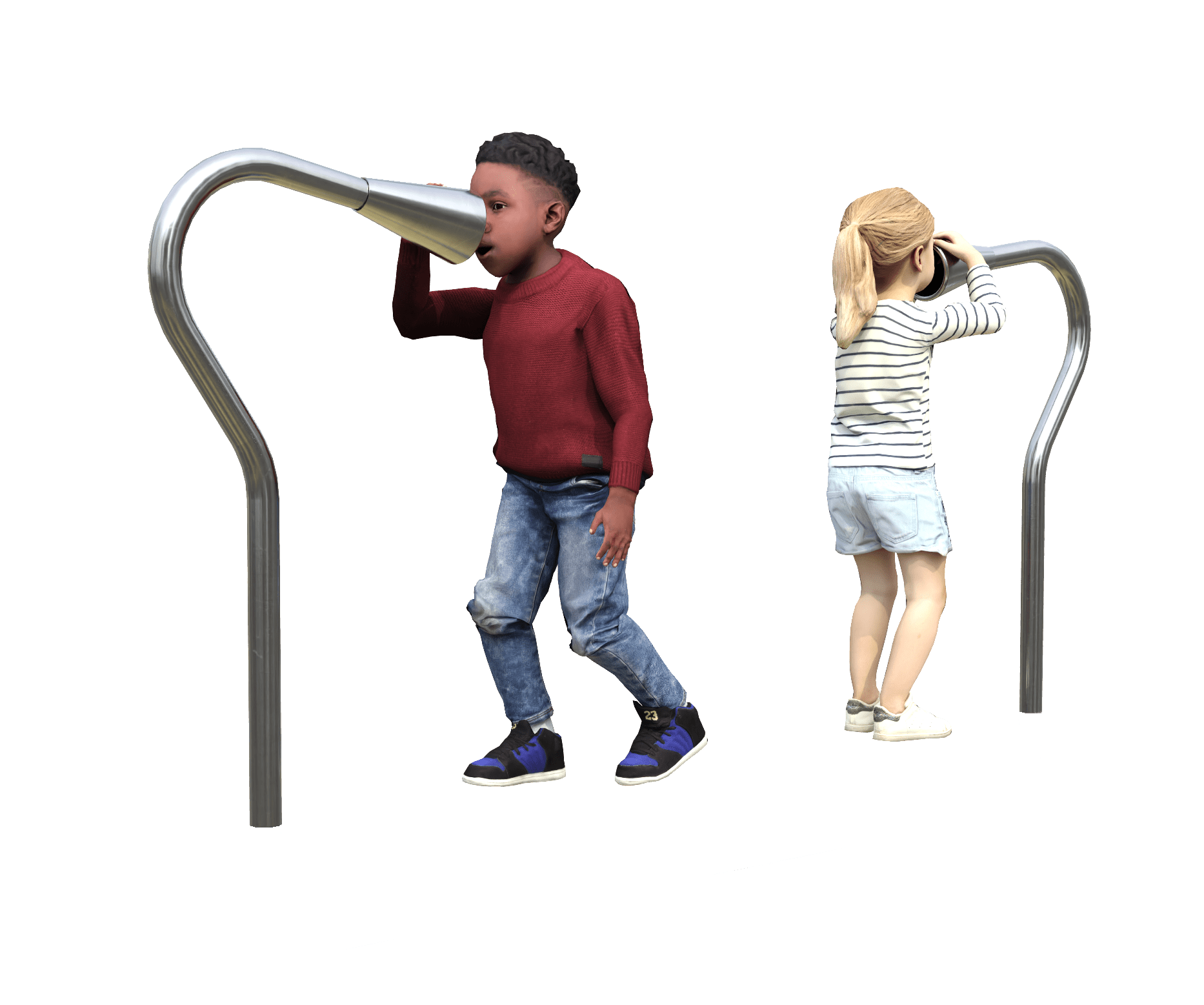
The second phase replaced an underutilised junior area with a mangrove-themed inclusive playground featuring easy-access ramps, wide slides, an Inclusive Orbit roundabout, sensory panels, interactive loudspeakers and sheltered seating. The redesigned play areas now enable children of all abilities to play together within the same themed environment – a clear commercial and social benefit for a venue that attracts families from across the region.
Inclusive playground design FAQs
What makes a playground inclusive?
An inclusive playground is one where children of all abilities, ages and sensory needs can play together in the same space, using the same equipment. It requires firm, accessible surfacing throughout, wide, unobstructed routes, inclusive play equipment and sensory features for neurodivergent children – as well as quiet areas for those who need areas of lower stimulation.
What does the Equality Act 2010 mean for playgrounds?
The Equality Act 2010 requires operators – including schools, councils and any organisation opening a play space to the public – to make reasonable adjustments so disabled people are not placed at a substantial disadvantage. There is no single prescribed standard for playgrounds, but operators must actively identify and remove barriers where it is reasonable to do so. BS 8300 provides the technical guidance supporting this obligation.
What equipment makes a playground inclusive?
Equipment that enables disabled children to play alongside peers on the same item – rather than on separate accessible-only alternatives – is the most valuable.
Key examples include:
• Inclusive orbit roundabouts, which are suitable for wheelchair users
• Cradle and basket swings
• Team swings
• Accessible climbing structures with ramped decks
• Sensory panels
• Musical play equipment.
What are the benefits of inclusive playgrounds?
Inclusive playgrounds give disabled children access to the same developmental benefits of play as their peers – physical, social and cognitive. For non-disabled children, inclusive design builds empathy and social awareness. For families, it means everyone can use the space together without separation.
What is sensory play and why does it matter?
Sensory play engages touch, sound, sight, movement and proprioception (body position and pressure). In playgrounds, it includes, but is not limited to:
• Tactile panels
• Musical play equipment
• Water features
• Textured surfaces
• Spinning or swinging equipment.
It is especially important for children with autism or sensory processing differences, but benefits all children by supporting attention, self-regulation and brain development.
How do you make a playground wheelchair accessible?
Use firm, flat, slip-resistant surfacing – such as wet-pour rubber or Matta Tiles – across all routes, with pathways at least 1,800mm wide and gradients no steeper than 1:12.
Include equipment a wheelchair user can engage with without transferring, particularly orbit roundabouts and ground-level sensory features. Where elevated platforms exist, provide transfer points at 400–500mm with handrails. The primary goal is full access to the whole playground, not just a designated section.