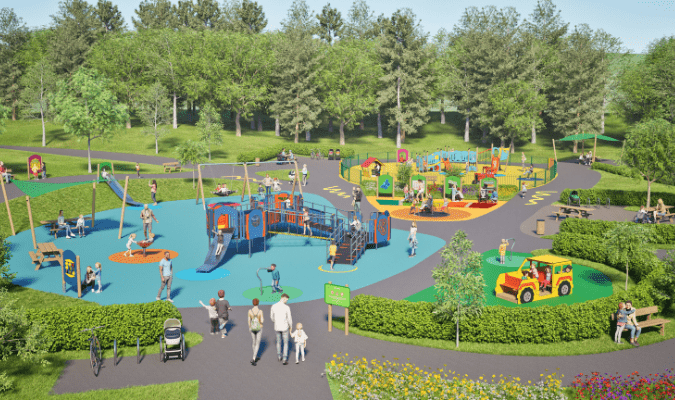
Inclusive playground design, done well, is invisible, not because it’s hidden, but because it’s so naturally woven into the design that no child has to think about it. They just play. Together.
It’s about more than just adding a single accessible feature. It’s about creating spaces where all children can play together.
When you walk into most playgrounds, you’ll spot it almost immediately. One piece of equipment, designed for children with disabilities, is segregated from the rest of the playground, which is buzzing with activity elsewhere. It’s well-intentioned, but it misses the point entirely.
Truly integrating inclusive playground equipment isn’t about adding a single accessible feature and calling it a day. It’s about designing spaces where every child, regardless of age or ability, can play on the same equipment, together.
When playgrounds are built with integration as a focus, something powerful happens. Children stop being separated by what they can or can’t do and start simply being children.
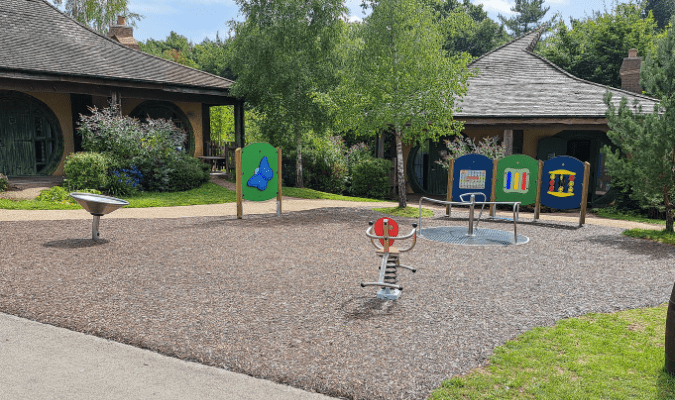
Over the past decade, inclusive playground design has gained significant momentum. However, somewhere along the way, “inclusive” has become a checkbox rather than a commitment. Adding a “token” accessible swing, Sensory Play Panel, or Inclusive roundabout does not make your playground inclusive; it just ticks a box.
When inclusive playground equipment has been isolated from the rest of the playground, children with SEND remain separated from their peers. Just because they are physically present in the same space, it does not mean they are truly part of the play. They are off to the side, using equipment that is clearly “for them”, while other children use everything else. That segregation, however intended, sends a message, and children notice it.
It’s not just the equipment that determines whether a space is accessible or not, but it’s also the surfacing beneath it.
Grass, sand, and loose-fill materials such as wood chips or bark are common playground surfaces. They’re affordable, familiar, and widely used. However, they present significant barriers for children who use wheelchairs or mobility aids. Uneven and unpredictable underfoot, these surfaces can make it impossible for a wheelchair user to move freely around a play space. A child might arrive to play only to find they can’t reach the equipment their friends are using, stopping them before they’ve even started.
Bonded Rubber Mulch and Wet Pour surfacing are far more effective solutions for truly inclusive playgrounds. Both offer a smooth, consistent surface that supports wheelchair movement and provides better underfoot stability for children with balance or mobility challenges.
Wet pour in particular can be installed across large areas and shaped to create accessible pathways throughout the space, connecting equipment, routes, and rest points without interruption.
Surfacing is not a finishing detail, it’s the foundation on which everything else rests. Getting it right is one of the single most impactful decisions in any inclusive playground design.
Choosing the right surfacing isn’t always straightforward, which is why early consultation is key to ensuring the space works for every child from the ground up.
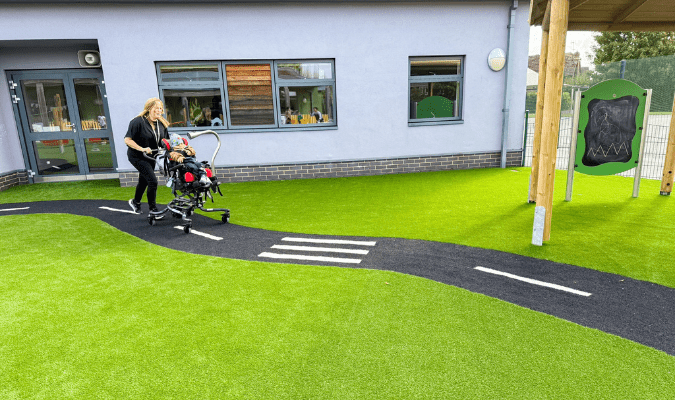
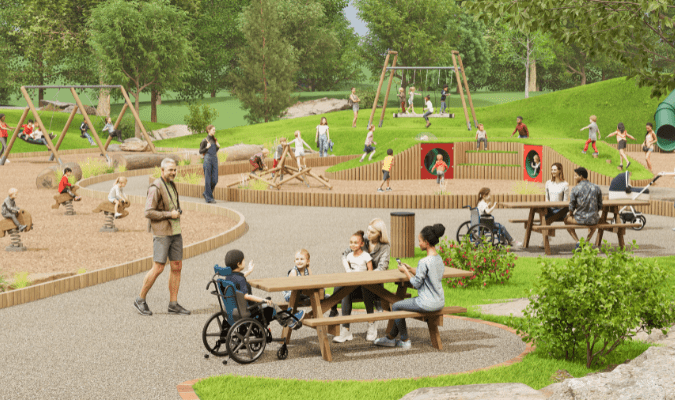
Integrating inclusion means weaving accessible playground equipment throughout the entire play space, not just in one corner. It means that when a child using a wheelchair approaches a play unit, they don’t have to wait while their friends climb up; they will have something to do when they arrive, alongside everyone else.
What does this look like in practice?
Multi-level access routes allow children of all abilities to reach the same play structures, using ramps, wide pathways, and transfer stations that are fully integrated into the main flow of the playground.
Sensory-rich elements are positioned throughout the space, rather than confined to a single “sensory zone”, encouraging natural interaction and shared play. Textured surfaces, musical features, and interactive Play Panels support children with sensory processing differences while remaining engaging for everyone.
Play opportunities at ground level ensure that children who do not climb are still part of the action. Sand and Water play, Gravity Bowls, and Inclusive Orbit Roundabouts create meaningful, exciting experiences in the heart of the playground, not on the sidelines.
Inclusive seating and rest points are thoughtfully distributed across the space, allowing children to pause and recharge comfortably without feeling separated or singled out.
Open-ended equipment invites different ways to play. Our Big City Beijing Plus, for example, can be explored at ground level by one child and scaled to the top by another, without defining a single “correct” way to use it.
When these features are embedded into the overall design rather than added as afterthoughts, the result is a playground that works for everyone, without anyone feeling singled out.
Children learn about the world through play. When a child without disabilities plays alongside a child who uses a wheelchair, a prosthetic limb, or has a sensory processing difference, they develop a natural understanding of human diversity, not through a lesson or a worksheet, but through shared experience. That kind of empathy, built early, stays with people.
For children with disabilities, being included in the main flow of playground activity rather than directed to a separate section sends a clear message that they belong here. That sense of belonging has a direct impact on confidence, social development, and emotional well-being. Children who feel included are more likely to engage, take risks, and form friendships.
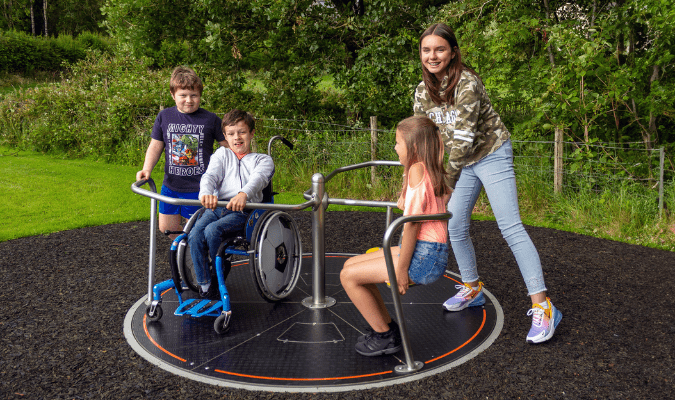
Parents and caregivers of children with disabilities often navigate public spaces with quiet anxiety, wondering whether their child will be able to participate, if they’ll feel left out, or if the trip will end in frustration. A truly inclusive playground removes that uncertainty. It gives families the freedom to just show up and play.
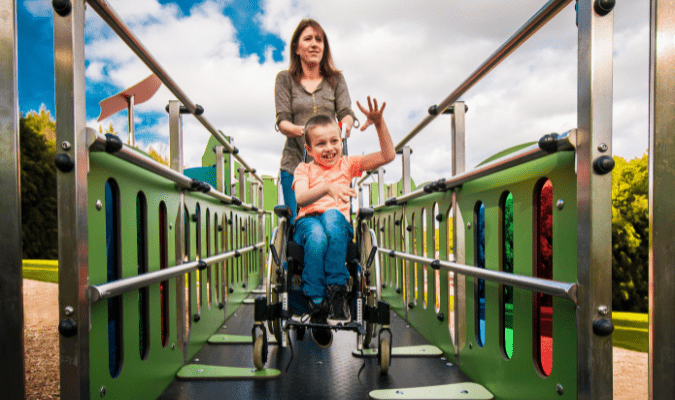
The most effective inclusive playgrounds are designed with input from the communities they serve. That means consulting with children of different abilities, speaking with parents and carers, and working with educators and occupational therapists who understand the specific needs of the children who will use the space.
It also means moving past the assumption that accessible design is limiting or less exciting. The best inclusive playgrounds are among the most imaginative spaces you’ll find, because the challenge of designing for everyone pushes designers to think harder, be more creative, and produce equipment with genuine play value for a wider range of users.
This is where experienced designers make a real difference, guiding projects from early consultation through to installation, ensuring every element works together to create a truly inclusive space.
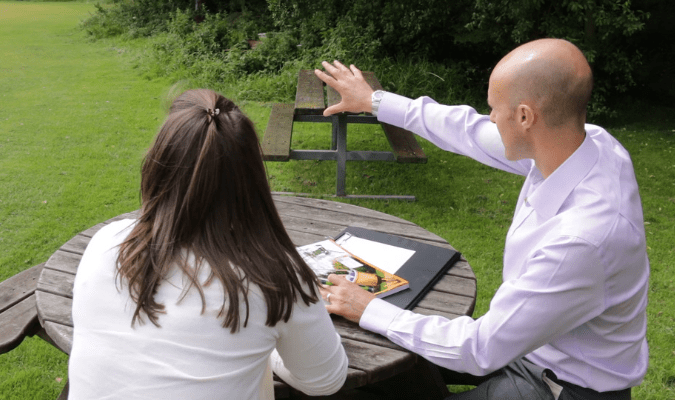
If you’re planning a new playground or reviewing an existing one, start with a straightforward question: Can every child here access the same experience?
Check the surfacing first. If it’s grass, sand, or loose-fill, consider how that affects a child in a wheelchair. Look at where the inclusive equipment sits. Is it woven throughout the space, or tucked to one side? Ask whether children of all abilities have routes into the same structures, or whether some children are consistently directed elsewhere.
If the answer to any of these questions raises a concern, there’s work to do. And it’s some of the most worthwhile work a community can invest in.
Speak to our team about how early consultation and thoughtful, integrated design can transform your outdoor space into somewhere every child feels welcomed, valued, and free to play.


Looking to get started on your playground project, but feeling a bit stuck? Take a look at the checklist below and start moving your project forward with confidence. Step 1 – Start with your expert playground consultation Every great playground starts with a conversation. At the beginning of your project, there are lots of […]
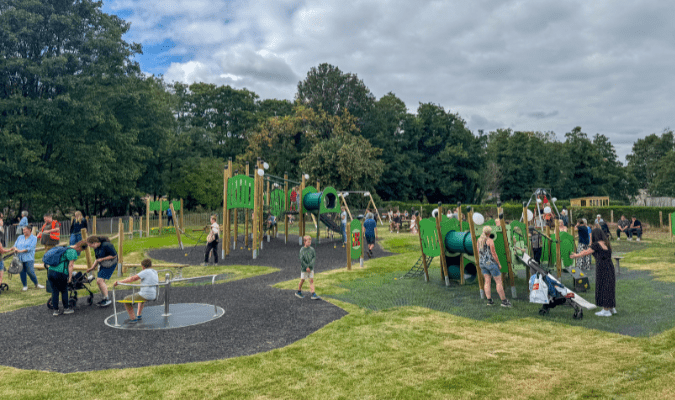
Playdale’s playgrounds are hardwearing thanks to their high-quality stainless steel and timber construction, as well as expert engineering and installation. However, no playground stays pristine forever – and after considerable play from excitable children, you must do your due diligence by inspecting and maintaining your playground. Read on for expert tips from our skilled playground […]
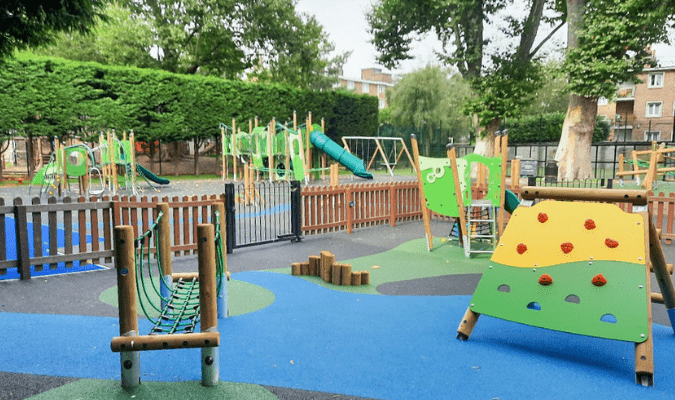
Take an insider look at how the installation process will be performed when installing your new play equipment with Playdale. Identifying and assessing the site Playdale has installed playgrounds for small sites, large sites, narrow or wide sites and in just about any sector you can imagine – from local authority-owned parks to nurseries, schools […]