Mud kitchens are universally popular with children of all ages. Children have been creating mud kitchens in the corner of their gardens for centuries. They provide hours of squelchy fun and are not just about making mud pies and dirt smoothies. Most schools have mud kitchens due to their immense learning potential. Teachers are able to change the setting of the mud kitchen into science labs, perfume factories and chocolate factories. Allowing them to organise learning activities relating to specific areas of the curriculum.
They are perfect for messy science experiments and developing speaking and listening skills. Children learn about scientific facts through play and are able to understand the concepts at their own level. It is easier for children to try the experiments themselves because they have more freedom to explore and try things out.
All you need to conduct science experiments in mud kitchens are measuring jugs, mixing bowls, sieves, water, stones, mud, spoons and usually a variety of mud kitchen accessories. There are two ways to introduce the science experiments to the children… The first method is to introduce, predict and demonstrate how to do the experiment explaining what you are doing and discuss what is happening. The second method is to give the children a set of equipment to choose from and a problem to solve. Both ways require different skills such as following instructions or problem-solving.
You will need sand, stones, water, containers, plastic ice cream containers with holes in it and sieves. The purpose of the experiment is to separate a mixture of stones, sand and water using available equipment.
You will need sand, clay, potting soil, water, measuring cup, ruler and disposable plates. The purpose of the experiment is to make the best mud pies by finding out which is the best type of soil and the correct amount of water.
You will need water, sand, clay, potting soil, peat and any other forms of soil you can find. The aim of the experiment is to find out which soil type makes the best smoothie consistency and mixes well with water.
If you would like to discuss our selection of mud kitchens contact us and we would be happy to offer advice.


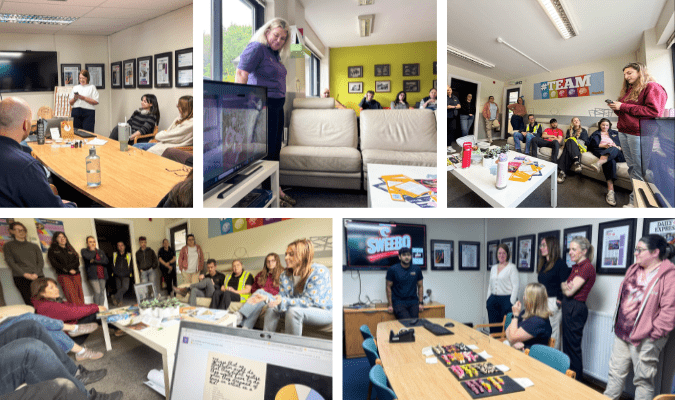
Learning at Work Week 2026 took place between 18th and 24th May and celebrated the value of continual learning, personal growth, and development within the workplace. This year’s theme, “Many Ways to Learn”, reflected something that is deeply embedded within life at Playdale. Throughout the week, 5 members of the Playdale team came together to […]
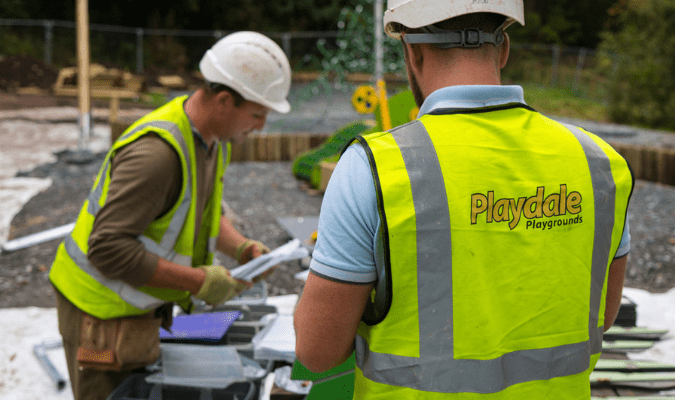
Planning a playground involves considerably more than choosing equipment. From initial site assessment and planning permission through to surface specification, layout design and inclusive provision, every decision has a bearing on how safe, accessible and enjoyable the finished space will be. This guide covers the key stages of playground planning and design, whether you are […]

Playground Equipment Inspection & Maintenance Regular playground inspections and maintenance are the two most important responsibilities any playground operator carries. No matter how well-specified a play space is at the outset, equipment deteriorates over time – fixings loosen, surfaces wear and timber is subject to the elements. A structured inspection programme, paired with prompt and […]