At Playdale, we know that childhood lessons don’t just take place in the classroom. Outdoor play is essential to a child’s development, from early years all the way through to their teens.
In fact, research shows that a child’s physical education during their early years is just as important for success later in life as their intellectual development.
We’re proud to be supporting children across the country to learn through play. Read on to find out how outdoor play supports physical, cognitive and social development.
The Early Years Foundation Stage (EYFS) system states that play is utterly essential to the development of a child from birth to the age of five.
Beyond this age, learning through play continues to be important – but ensuring that children have the ability to engage in solo play, parallel and cooperative play before the age of five is vital to building lifelong social and physical skills.
The EYFS framework forms the curriculum for children up to age five. It is split into seven areas – three Prime Areas and four Specific Areas.
The Prime Areas refer to essential foundational skills for learning, from which the Specific Areas can grow.
According to the EYFS framework, the three foundational elements for childhood learning between ages one and five are:
• Communication and Language
• Physical Development
• Personal, Social and Emotional Development.
These skills allow children to properly engage with learning and development, allowing them to grow in four Specific Areas:
• Literacy
• Mathematics
• Understanding the World
• Expressive Arts and Design.
It’s clear how the EYFS Prime Areas framework links to outdoor play. Playing with other children at a young age allows children to practice their communication with their peers, explore physical development through activity and begin understanding how they can socially and emotionally interact with their peers.
Outdoor play inherently directly influences one of the Specific Areas of the EYFS framework (Understanding the World), but also gives children the building blocks to begin engaging with the Specific Area concepts. Meanwhile, specific outdoor educational play equipment can begin teaching children about literacy and mathematics.
Once children are older than five, they develop new ways of thinking, interacting, solving problems and managing risk. Child development theorist Jean Piaget highlights two key stages between the ages of five and 11 that inform development through play.
Ages 5-7: Preoperational to Concrete Operational transition
• Children enjoy imaginative play but begin to understand rules and cause-and-effect.
• Children benefit from activities like role play, den building, exploring nature and simple team games.
• Hands-on experiences are more important than abstract explanations.
Ages 7-11: Concrete Operational stage
• Children employ more logical thinking in relation to real objects and experiences.
• They enjoy practical challenges, more complex game rules and working in teams.
• Children are stimulated by outdoor play that encourages reasoning and cooperation, like treasure hunts, map reading, gardening, etc.
So, we know that play helps children to develop in relation to the world around them, but which physical facets specifically benefit from outdoor play?
Development milestones – such as sitting up, crawling or taking their first steps – are just the beginning in an ongoing process of developing gross motor and locomotive skills that continues throughout the early years and further into childhood.
Outdoor play helps develop a number of physical skills, which the Early Years Organisation advises as essential for developing body management, balance, coordination, strength, agility and confidence.
These physical skills are:
• Walking forwards, backwards and sideways
• Walking on tip-toes (balance)
• Running, stopping and starting
• Climbing up steps or a ladder with one foot leading
• Pivoting around and around on feet
• Jumping up and down on the spot on both feet
• Jumping a distance
• Balancing along a plank 18cm from the ground
• Balancing on one leg for four seconds
• Crawling through a barrel or tunnel.
There are various pieces of playground equipment that can help develop these skills during the early years. Wobble boards, climbing nets and timber steps are all great for developing balance, overcoming obstacles and fostering a sense of adventure and mastery in young children.
Meanwhile, regular use of these pieces of equipment will help improve children’s general strength and conditioning over time – think of a playground as a fun, outdoor gym!
It might look like kids just mucking about, but sensory physical play – like playing in sandpits, with water or even rolling in the grass and feeling the bark on a tree – are of paramount importance in the early years.
Sensory exploration is a child’s way of discovering, examining, categorising and trying to make sense of the world. These physical activities encourage scientific thought processes that are invaluable later in life.
Sensory play supports childhood development by working on important fine motor skills. Modelling with sand, for example, strengthens the muscles in the hands in preparation for writing. Sensory play can be especially beneficial to the development of children with Special Educational Needs.
There is also plenty of evidence for how outdoor play supports cognitive development. Unlike the indoor environment (in most cases), the outdoor environment is constantly changing, encouraging children to adapt their thinking and make decisions independently.
Interaction with the world around them encourages children to sub-consciously build on their problem solving and critical thinking skills. They’ll learn about trial and error while considering the best way to build a den or complete an obstacle course, developing reasoning and resilience when things do not work as planned the first time.
Outdoor experiences also provide rich opportunities for children to develop new vocabulary and communication skills. New environments introduce new language, while cooperative games give children an encouragement to explain ideas to others.
Outdoor play also builds on executive functioning, helping children to manage and moderate their thoughts and behaviour. Concepts like planning and organising activities, controlling impulses, switching between tasks and solving problems independently are all relevant.
A child’s understanding of more abstract concepts can be enhanced through outdoor play, too. The outdoors provides practical opportunities to explore concepts like pattern recognition, measuring distances and heights, and counting or sorting natural objects.
Even concepts that seem simple, such as learning how to use a playground swing, can teach a range of lessons.
Creativity and imagination are also promoted – outdoor play encourages children to ideate new ways of interacting with equipment, people and the outdoor environment.
Meanwhile, social development is also encouraged through outdoor play – an outdoor playground puts children in social situations with their peers outside of the classroom.
These interactions allow opportunities for learning through play that are unstructured and unique. Children can have interactions with peers that they may or may not know, giving them the chance to grow in confidence as they form and develop friendships.
Through use of a playground, children learn social skills such as waiting their turn or moving out the way of other children, giving them building blocks for other aspects of life and laying the groundwork for the workplace.
Being able to define how they feel and express it appropriately helps children to have greater control of their emotions later on in life. Understanding how others feel and how to change the way you act towards others is an essential skill for all future relationships.
Taking turns and sharing with their peers helps children to control their emotions and sort out problems in a kind way. Children who are not in control of their emotions tend to lash out either verbally or physically and cause great distress.
Meanwhile, outdoor play will teach resilience through emotional interaction: the child who is unable to control their emotions will find it difficult to make and retain playground friendships in the future. They will also sabotage good experiences if they are unable to put their negative emotions into perspective.
Children who recognise what happiness and success feel like are more likely to set themselves challenges to feel the emotional reward. Those who recognise the feeling of sadness and failure are able to express themselves and look for ways to learn from their mistakes. A child who knows how to find contentment and peace will be able to cope better with adversity in everyday life.
People with high emotional IQs are just those who understand their own and others’ emotions well. They are able to change tack if a conversation is going awry and able to turn a negative interaction into a positive one.
Once children learn that screaming and stamping their feet doesn’t get them their own way, they learn to cooperate.
Other aspects of childhood health and wellbeing can also be stimulated by outdoor play, including:
NHS and government guidance highlights a clear connection between outdoor play and improved mental health.
Outdoor play has been shown to help reduce anxiety and improve mood in children, thanks in part to the stimulation of physical activity.
Another positive outcome of the enjoyment of outdoor play is that it encourages development without screen interaction. Children who take more enjoyment from outdoor play are less likely to become sluggish and reliant on screens.
This is because outdoor play boosts natural physical exhaustion, regulates children’s internal body clocks and stimulates sleep-promoting hormones like melatonin.
Different settings can support childhood development through play, in ways that are well-suited to particular end goals. For example, schools and academies can facilitate development through play in a different way to nurseries and early years settings.
For schools and academies, outdoor play is an important part of delivering the curriculum, rather than something that sits alongside it. Well-planned outdoor experiences and access to school playground equipment help meet learning objectives, supporting children’s development and demonstrating high-quality practice during inspection.
While OFSTED inspectors don’t look for a specific type or style of outdoor provision, they hope to see outdoor equipment that facilitates outdoor learning, thereby contributing meaningfully to children’s education.
Meanwhile, nurseries and play settings specific to early years must take the EYFS into consideration. Play provisions must provide an age-appropriate challenge, usually with a free-flow element.
Discover our Early Years Playground Equipment.
Mixed-age community settings like parks and local authorities also have a range of factors to consider. The LAPs, LEAPs and NEAPs frameworks must be taken into account.
There is also the question of social development outcomes – community parks often have more of a focus on fitness, with outdoor gym equipment and more.
Discover our Community Playground Equipment for parks.
Play-based learning can begin from birth! In fact, sensory play – like babies shaking their rattles or stacking blocks – is a very early form of sensory play.
Meanwhile, having age-appropriate play equipment for toddlers is vital to help children move through the EYFS framework.
NHS experts typically recommend that children spend at least three hours a day (180 minutes) being active. Ideally, a good chunk of this time is spent outdoors, thanks to the inherent nature of outdoor play.
There is no specific guidance on time spent outside, but we recommend giving children as many opportunities as possible to explore the world around them.
All children benefit from outdoor play, but neurodivergent children in particular can draw a lot of benefits from this type of play. Movement and sensory processing can shape how a child experiences the outdoors.
Read our blog on creating and using an inclusive playground for more information.
Sensory play equipment is great for stimulating cognitive development. Ideal options include sensory walls or panels, spinning play items, mud kitchens, and sand and water play stations.
Novel playground equipment, like musical instruments, is fabulous for stimulating creativity.
However, playground favourites like roundabouts and climbing frames are also great – anything that children can interact with in a variety of ways will help teach them about engaging with the outside world.


We understand that every penny matters. Schools across the UK are under increasing pressure to make their budgets stretch further while delivering the best possible experience for pupils. With changes to PE and school sport funding on the horizon, planning and managing your budgets carefully is more important than ever. The UK Government has recently […]
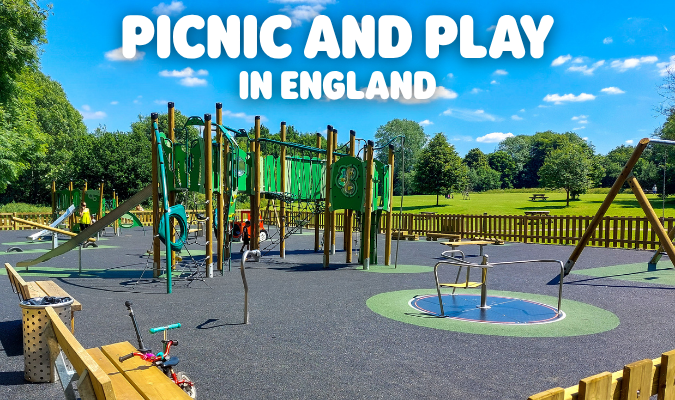
Picnic & Play… in England Welcome to our 2026 Picnic and Play guide, bringing together some of our favourite family-friendly parks and playgrounds across England. With fantastic playground equipment and plenty of space to unpack a picnic, each destination makes the perfect place for a family day out this summer. There are, of course, many […]
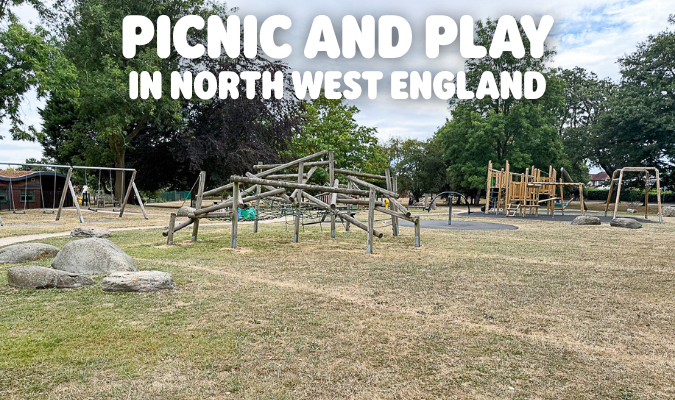
Picnic & Play… in North West England Welcome to Playdale’s Picnic and Play guide for 2026, created to help families find the best parks and playgrounds over the summer holidays! We’ve made sure all these parks are equipped with a fantastic selection of playground equipment and spaces to relax and enjoy a picnic. This time, […]